1 / 3
Ionizer
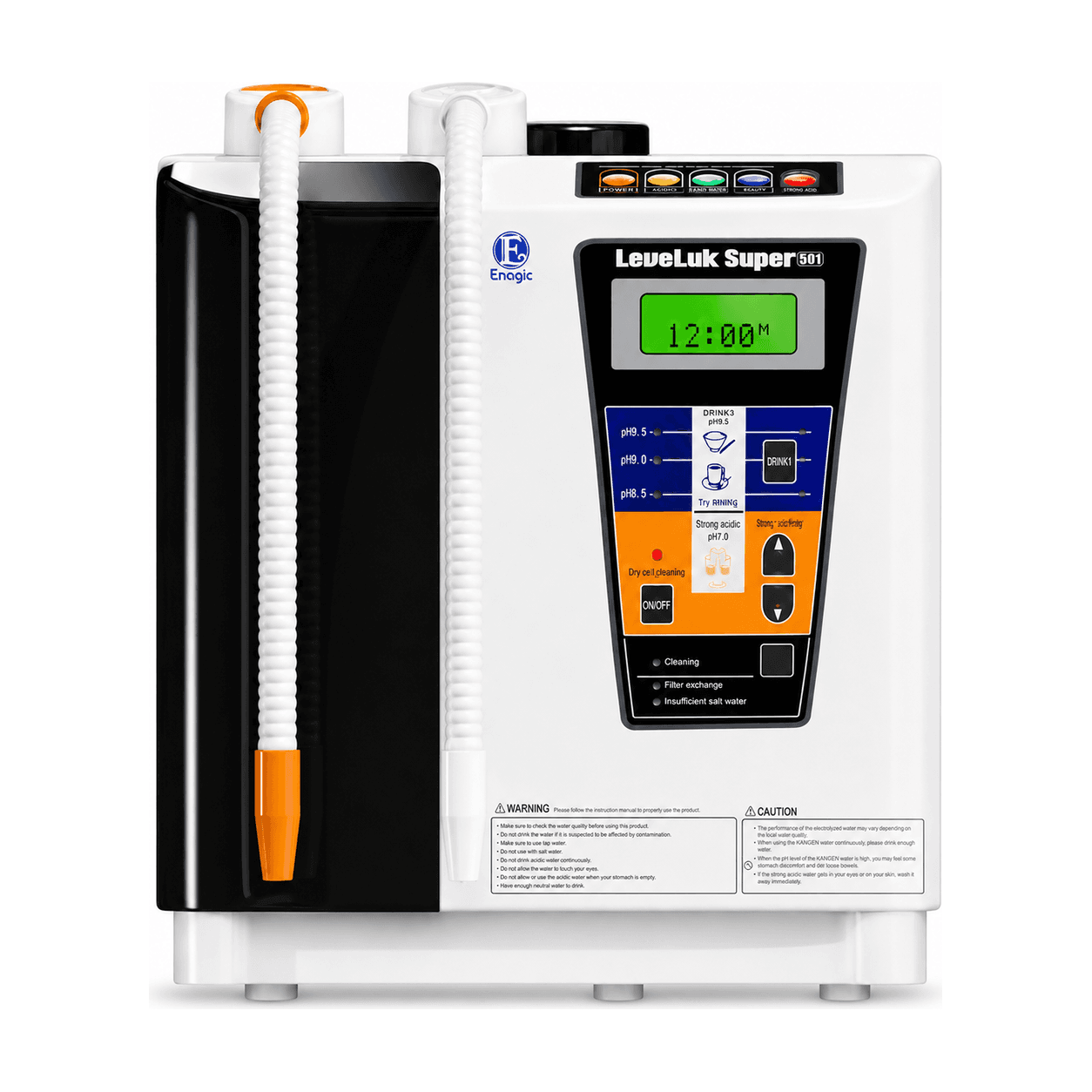
Leveluk SD501 DX
The Advanced 7-Plate Home Model
Payment option available: 0% interest installment for up to 12 months on selected cards.
Terms may vary depending on selected card and approval.
- 7 platinum-coated 99.97% pure titanium plates
- Generates all 5 Kangen water types
- Large one-touch LCD panel
Warranty5-year limited warranty
Questions about this model? Call 0917 322 3969
Key specifications
- Electrode plates
- 7
- Water types
- 5
- Production rate · Kangen
- 4.5 – 7.6 L/min
- Limited warranty
- 5 years
Why choose this model
What the Leveluk SD501 DX does.
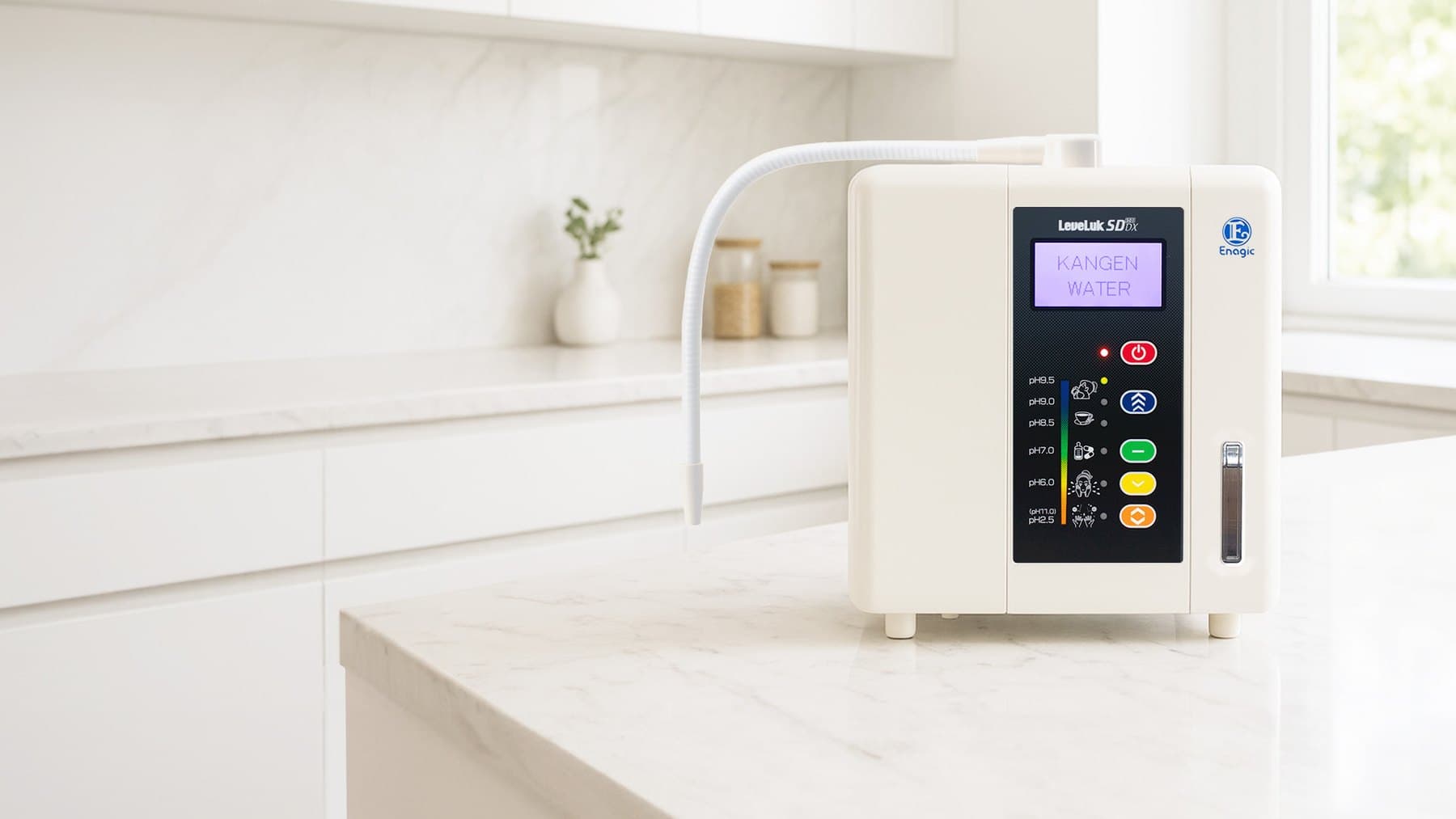
Enagic's newest home ionizer, and its most advanced seven-plate system. Seven platinum-coated 99.97% pure titanium plates generate all five water types, with a large LCD panel, voice confirmation in eight languages, automatic cleaning and a worldwide multi-voltage supply.
- 7 platinum-coated 99.97% pure titanium plates
- Generates all 5 Kangen water types
- Large one-touch LCD panel
- Voice confirmation in 8 languages
- Automatic cleaning, microcomputer controlled
- Worldwide multi-voltage power supply
- High output — up to 7.6 L/min of Kangen Water
- Best for
- Families wanting Enagic's newest home ionizer
- Household
- Medium to large households
- Recommended for
- Households that want Enagic's latest high-output home system
- In the range
- The New Model
How it works
How the Leveluk SD501 DX produces Kangen Water.
Source water is drawn through an electrolysis chamber, where the plates separate it into the alkaline and acidic streams the panel offers.

Platinum-coated titanium plates
The plates are where the work happens — titanium dipped in platinum, stacked inside the electrolysis chamber the water is drawn through. How many there are, and how large they are, is what describes the chamber.
- Electrode plates
- 7
- Plate size
- 135 × 75 mm
Full-colour control panel
Everything is chosen at the panel: which water you want, and which language you would rather read and hear it in.
- Display
- Large LCD with voice
- Languages
- 8
Automatic cleaning
The unit runs its own cleaning cycle through the electrode chamber, so keeping it maintained is not something you have to schedule. Follow your manual on what to do with the water a cleaning cycle discharges.
- Cleaning
- Automatic
Hydrogen-rich water
What the Leveluk SD501 DX dissolves into the water.
Electrolysis does two things at once: it separates the alkaline and acidic streams, and it can dissolve molecular hydrogen — H₂ — into the drinking-water stream. That hydrogen is a gas carried in the water rather than the water itself: H₂ dissolved in H₂O, the way carbon dioxide is dissolved in sparkling water. It escapes over time, which is why the Leveluk SD501 DX makes water at the tap as you draw it instead of bottling or storing it.
This model’s specification lists a negative ORP of −631 mV — a measurement of the water, not a statement about what it does in the body. Research into hydrogen-rich water is an active and still developing field.
The five water types
One machine, five settings.
Every Leveluk ionizer produces the same five water types, from strongly acidic to strong alkaline. Two of them are intended for drinking. The other three are for household and external use, and are labelled that way everywhere they appear.
For drinking
Two of the five settings
pH8.5 – 9.5
For drinking
Kangen Water
Mildly alkaline water for everyday drinking and cooking — the heart of the Enagic hydration routine.
- Everyday drinking
- Cooking rice & soups
- Coffee & tea
Your daily glass, your morning coffee, your family's cooking.
pH7.0
For drinking
Clean Water
Filtered, pH-neutral water for moments when you want a clean, neutral glass.
- Neutral drinking water
- Preparing baby food
- Taking with medication
A clean, neutral glass for the whole family.
Not for drinking
Three of the five settings — household and external use only
pH11.0
Not for drinking
Strong Kangen Water
A strong alkaline water for cleaning and food-preparation tasks around the home — not intended for drinking.
Typical uses
- Food preparation
- Soaking & cleaning produce
- Tough cleaning tasks
Prepping vegetables and cleaning around the kitchen.
pH4.0 – 6.0
Not for drinking
Beauty Water
A mildly acidic water often used as a toner in beauty routines — for external use, not for drinking.
Typical uses
- Skin toning
- Beauty & grooming routine
- Gentle surface cleaning
A refreshing part of your morning and evening beauty routine.
pH2.7
Not for drinking
Strong Acidic Water
A strongly acidic water for cleaning and household hygiene tasks — not intended for drinking.
Typical uses
- Cleaning surfaces & utensils
- Wiping down kitchen areas
- General household hygiene
Keeping kitchen surfaces and utensils fresh and clean.
What the panel actually says
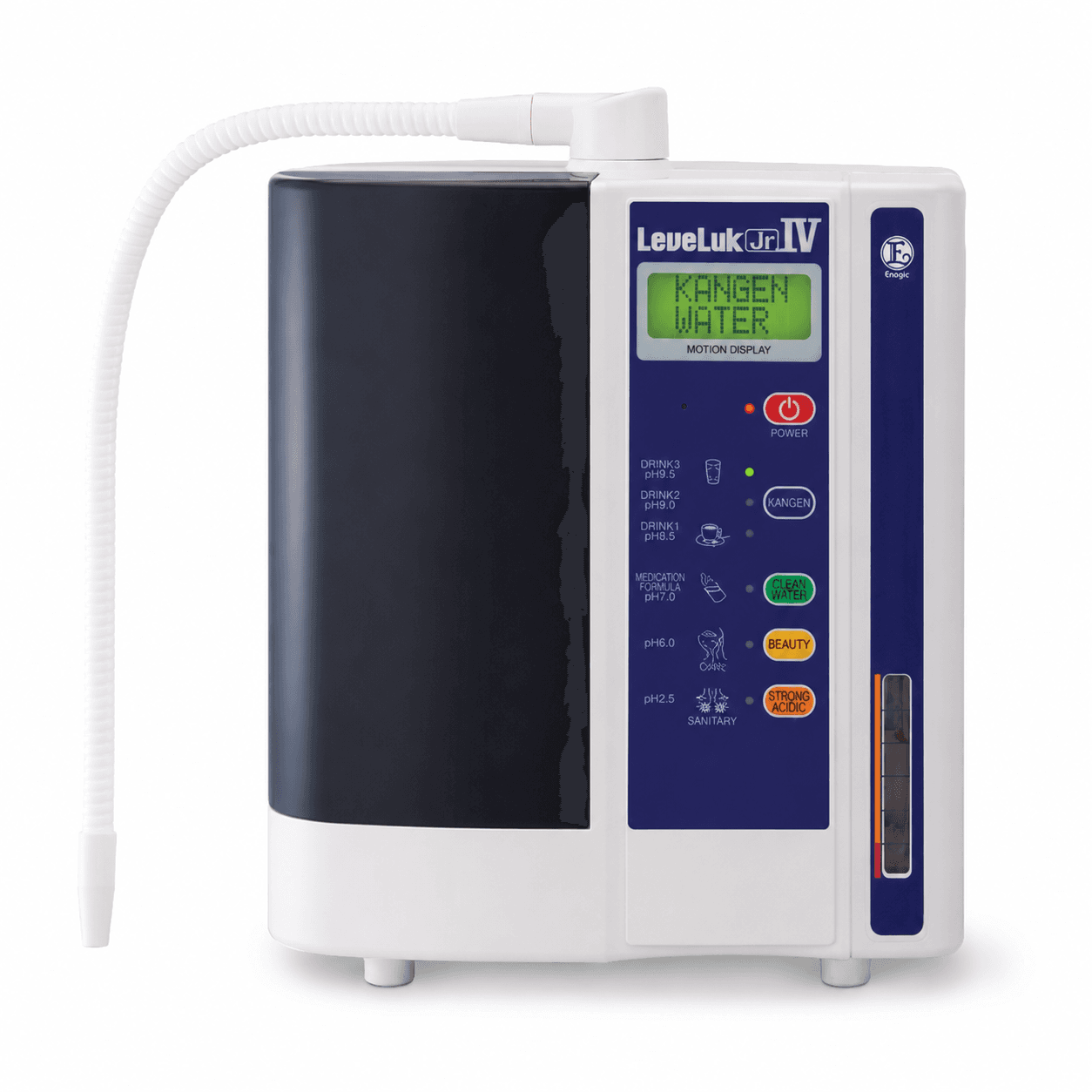
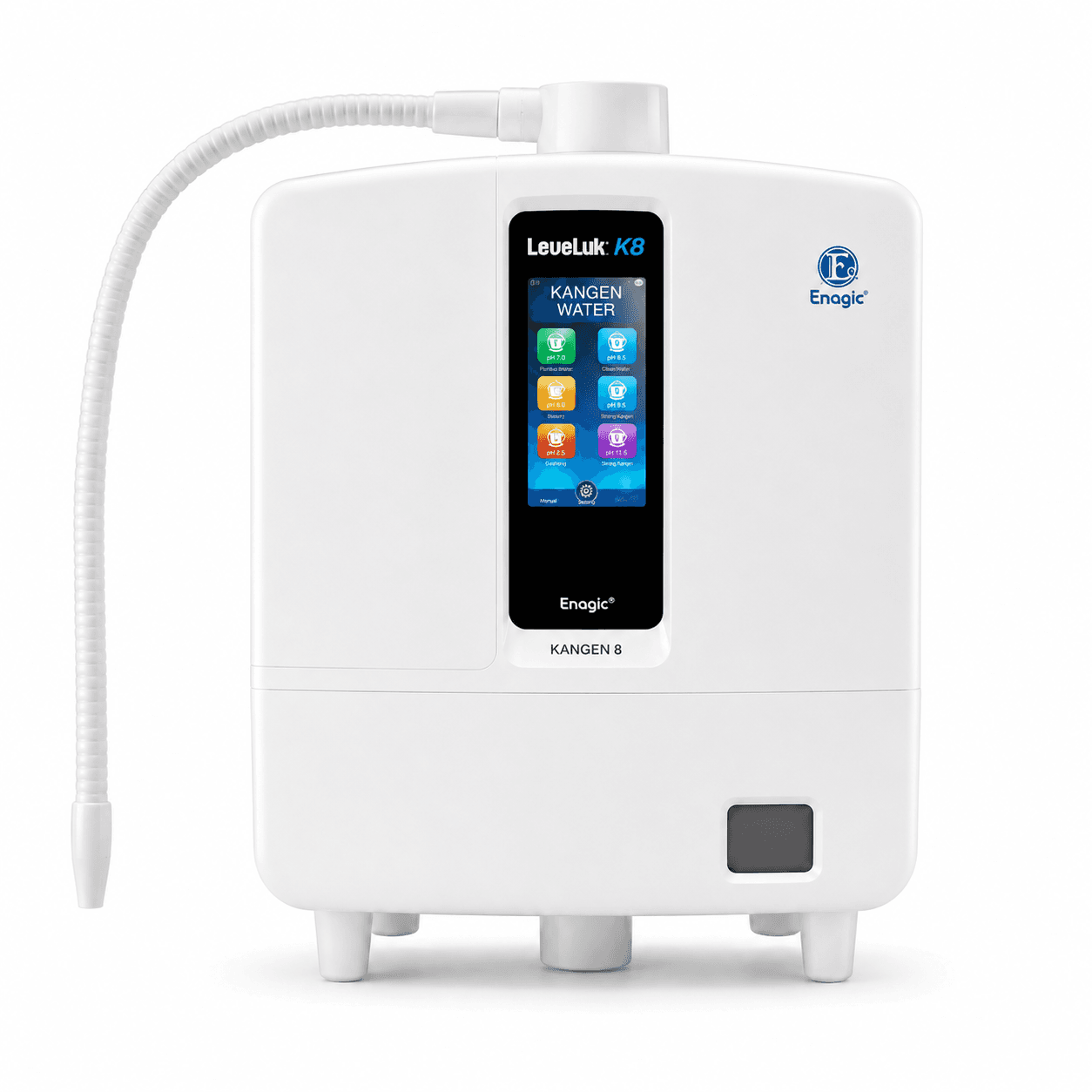
Panel labels vary by model, and they are not the water-type names. On the Leveluk K8 the home screen reads pH 8.5, pH 9.0 and pH 9.5 for Kangen Water, pH 7.0 for Clean Water, pH 6.0 for Beauty Water and pH 2.5 for Strong Acidic Water. There is no Strong Kangen button at all: on the pH 2.5 setting, Strong Kangen Water leaves the flexible pipe at the same moment Strong Acidic Water leaves the secondary pipe, and neither of those is for drinking.
The figures listed above belong to the water types themselves; the figures on a panel are the settings that produce them, and the two are quoted differently — Strong Acidic Water is listed here at pH 2.7, while the tile that produces it is labelled pH 2.5. Read the settings off your own unit rather than another model’s documentation.
Using your system, setting by settingWater-type uses are general product education. Official Enagic guidance governs drinking and non-drinking use.
Installation
Installation, made clear.
- Your faucet
- The unit works from a standard kitchen tap through a diverter. Taps differ, so the fitting is matched to your faucet before anything is installed.
- The diverter
- It sits at the tap, and its lever chooses between ordinary tap water and water routed through the machine.
- Hose routing
- Flexible pipes run between the tap and the unit. Leave enough slack that the machine can be moved for cleaning without pulling on the connection.
- Countertop placement
- It measures 264 × 338 × 171 mm. It weighs 5.4 kg, so it wants a stable surface.
- Power
- The unit draws 230 W, multi-voltage. A multi-voltage supply means the same machine runs on different mains standards — confirm the outlet and plug type for your home.
- When to call for help
- An unusual faucet, or anything that means altering fixed plumbing, is work for a plumber or an authorized Enagic representative rather than a DIY afternoon.
How to use
Everyday use, step by step.
- Connect the unit to your kitchen tap through a diverter.
- Power on and let the system run its automatic start-up checks.
- Select the water setting on the panel that matches your task.
- Fill your glass or container straight from the spout.
- Follow the on-screen filter reminders for simple upkeep.
The operation manual supplied with your Leveluk SD501 DX is the final word on everyday use.
Maintenance & warranty
After you take it home.
5-year limited warranty
Registration, servicing and the terms that apply to your unit are arranged through an authorized Enagic representative. Routine cleaning and upkeep are covered in the support centre.
Full specifications
Every figure, on the record.
- Dimensions
- 264 × 338 × 171 mm
- Weight
- 5.4 kg
- Electrode plates
- 7
- Plate size
- 135 × 75 mm
- Water types
- 5
- pH range
- 2.5 – 11.5
- Negative ORP
- −631 mV
- Production rate
- 4.5 – 7.6 L/min (Kangen) · 1.5 – 2.6 L/min (Acidic) · 0.6 – 1.1 L/min (Strong Acidic)
- Power
- 230 W, multi-voltage
- Display
- Large LCD with voice
- Languages
- 8
- Cleaning
- Automatic
- Dimensions (W×H×D)
- 264 × 338 × 171 mm
- Weight
- 5.4 kg
Compare models
The alternatives.
Weigh the Leveluk SD501 DX against the rest of the range before you decide.
Questions
Before you decide.
Speak with an authorized Enagic representative — Call 0917 322 3969
Next step
Book a presentation.
An authorized Enagic representative will walk you through the Leveluk SD501 DX, answer your questions and explain the options. Product education first — there is no obligation.