There is a scolding version of this subject, and it is both unpleasant and ineffective. People buy convenience because they are tired, because the commute took two hours, and because the alternative required energy they did not have. None of that is a character flaw.
What is worth doing instead is looking at the terms. Convenience is a trade — money and packaging in exchange for time and effort — and most households have never seen the total on either side.
The total is made of small decisions
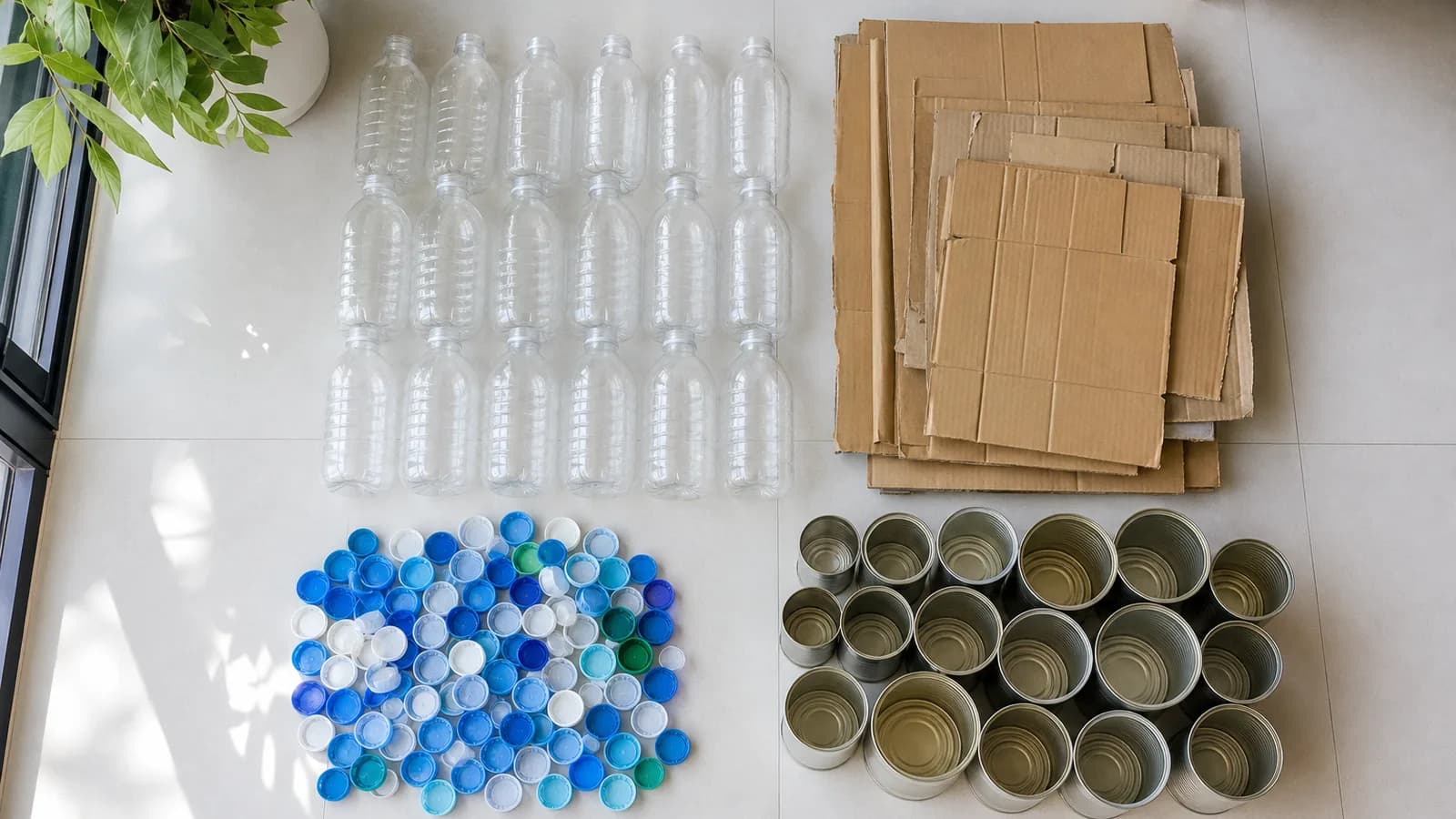
Nobody decides to generate five hundred plastic bottles a year. They buy one bottle, twice a day, on a route where there is nowhere to refill — the accumulation described in simple ways to reduce plastic bottles at home.
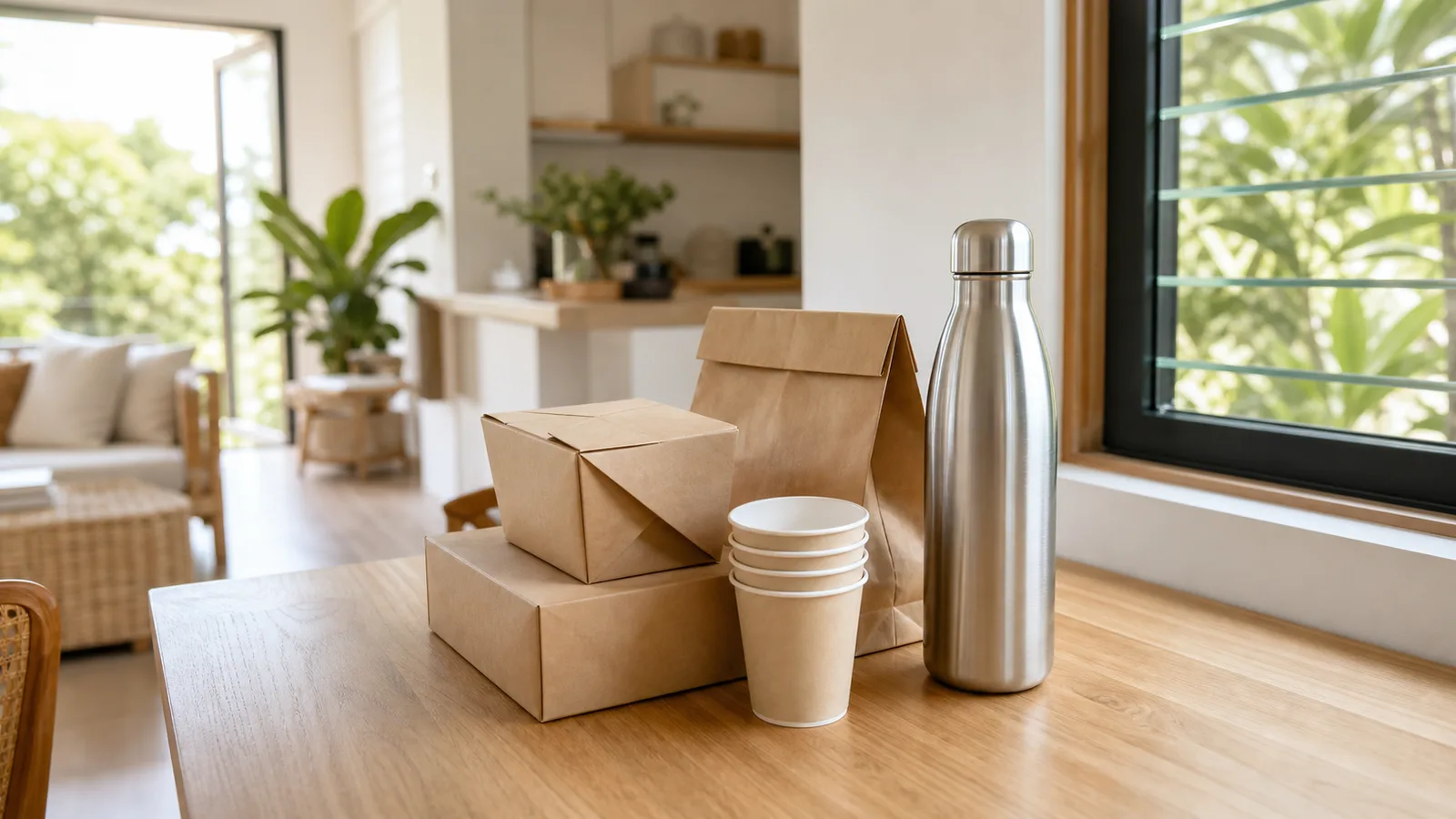
The same shape applies to delivery meals, coffee cups, sachets and shopping bags. Each individual instance is trivially small and defensible; the year is neither. And because no single decision felt significant, the total never gets examined.
The two costs, kept separate
It helps to stop merging them, because they behave differently.
Which conveniences are worth paying for
Most of them, at least sometimes. The question is which ones you are paying for by default rather than by choice.
- Is this recurring or occasional? A weekly delivery is a decision; a delivery on a difficult Tuesday is not worth thinking about.
- What is it actually buying? Twenty minutes, or the absence of a decision? The second is usually cheaper to solve — slow mornings, realistically.
- Is there a version that removes the friction permanently? A filled bottle by the door removes the daily purchase without removing the convenience.
- Does the alternative require energy I have? If not, the alternative does not exist, and the honest answer is to pay.
That fourth point is the one most sustainability writing omits, and it is why so much of it reads as though it were written for someone with a spare hour every evening.
Our own product, on the same terms
A home water system is a convenience purchase, and it should be assessed as one rather than dressed up.
What it buys is the removal of a recurring logistical task — no delivery to wait in for, nothing running out on a Sunday, no containers on the floor. What it costs is an upfront price, a filter cost, an installation requirement and a dependence on power and pressure, plus its own small stream of spent cartridges. The arithmetic belongs to you rather than to a brochure: what it costs to run a hydrogen water system and is hydrogen water worth it?.
For a household already spending steadily on delivered water over years, it can come out ahead on both money and packaging. For a household drinking safe tap water through a cheap filter, it will not. Both are true, and which one applies is a question about your kitchen rather than about the product.
The conclusion, without the scolding
The aim is not to eliminate convenience. It is to stop buying it by default in the two or three places where it repeats daily, and to keep it freely everywhere else.
That is a small programme with a large total, and it is considerably more achievable than a general resolution to consume less — which, like most general resolutions, does not survive a difficult week.
General consumer information, not financial advice.
Sources
Filed under
- Sustainable Living
- convenience
- packaging
- delivery
- cost
- consumption