Hydration produces unusually durable folklore, probably because everybody drinks water and nobody measures anything. Here are the claims that will not die, with what is actually established in each case.
General information, not medical advice. Specific fluid instructions from a doctor — for kidney, heart or other conditions — override everything on this page.
"Eight glasses a day"
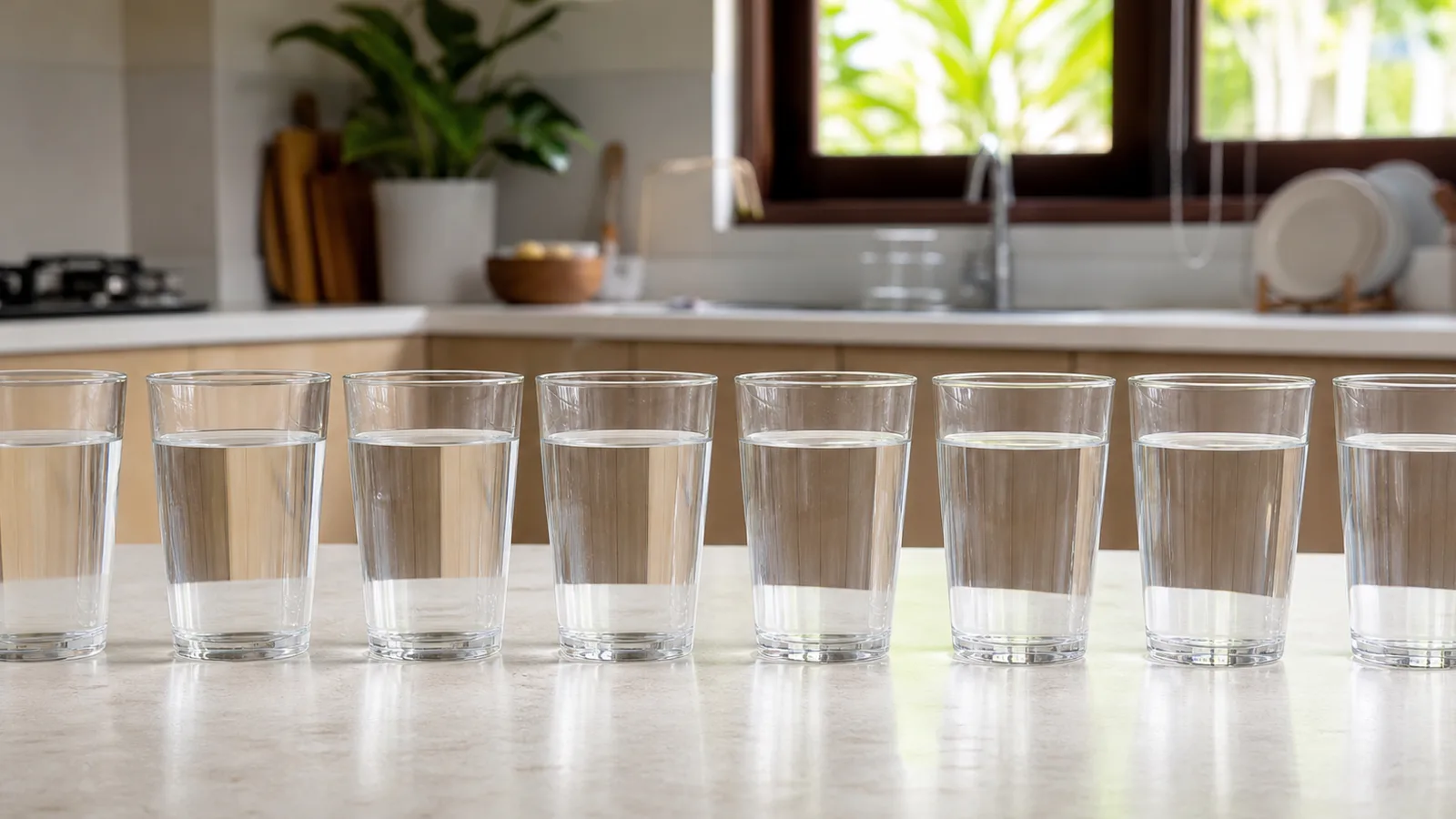
The most repeated number in the subject, and it is not a recommendation anybody made. Reference values for total water intake are stated as ranges, they include water from food and from all drinks, and they vary by sex, body size, activity and climate.
In a country where the heat index regularly sits above thirty-five, a single fixed number would be wrong in both directions on the same day. What the actual guidance looks like is in how much water should you drink each day.
"Coffee and tea dehydrate you"
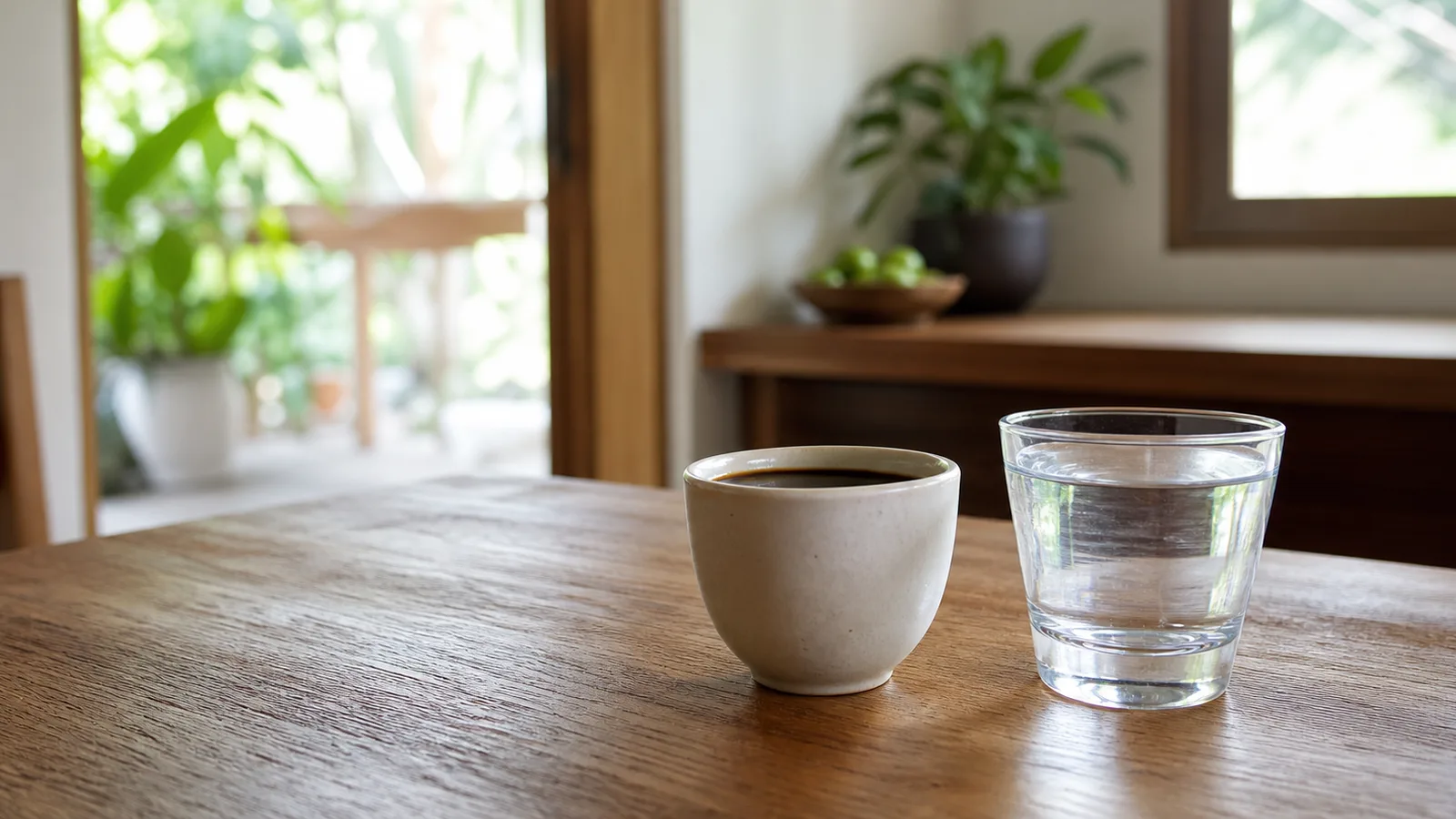
Caffeine has a mild diuretic effect. At habitual intakes it does not produce a net fluid loss — the fluid in the cup more than covers what the caffeine prompts you to lose, and regular drinkers develop tolerance to the effect anyway.
So coffee and tea count toward your daily fluid, and subtracting them produces a figure that is wrong. The detail is in does coffee count toward your daily water?.
"If you're thirsty, you're already dehydrated"
The line is used to imply that thirst is a broken or late signal. It is neither — it is a regulatory mechanism that responds to small changes in blood concentration, which is precisely what it is for.
The genuine caveats are narrower and worth knowing: thirst is blunter in older adults, unreliable in young children, and easy to override when concentrating or when a bathroom is inconvenient. Those are the cases that need a habit rather than a signal — hydration for older adults, hydration for children and hydration at a desk.
"Your urine should be clear"
Pale is the useful target, not clear. Consistently colourless urine mostly indicates that you are drinking more than you need and excreting the surplus, which is harmless but is not an achievement.
Colour is also a rough signal used well past its resolution. B vitamins turn it bright yellow, some medications change it, and it shifts through the day for reasons unrelated to fluid — so treating a colour chart as a measurement is the error, not consulting it at all.
"More water is always better"
There is no upward slope past adequate. Drinking beyond what you need does not improve skin, energy, concentration or anything else — it produces more trips to the bathroom.
At the far end, drinking very large volumes very quickly can dilute blood sodium dangerously. This is rare and mostly arises in endurance events or in challenges, but it is the reason "more is always better" is not a harmless piece of folklore — electrolytes and when they actually matter.
Four more, briefly
Why these survive
Because each one is simple, memorable and unfalsifiable in daily life. Nobody notices that drinking eight glasses did nothing, because nothing was going to happen either way.
And several of them are useful to somebody selling something — a fixed target sells bottles and apps, and "plain water isn't enough" sells everything else. The general skill for spotting that is in reading health claims without being fooled.
Sources
Filed under
- Hydration
- myths
- evidence
- eight glasses
- thirst
- caffeine