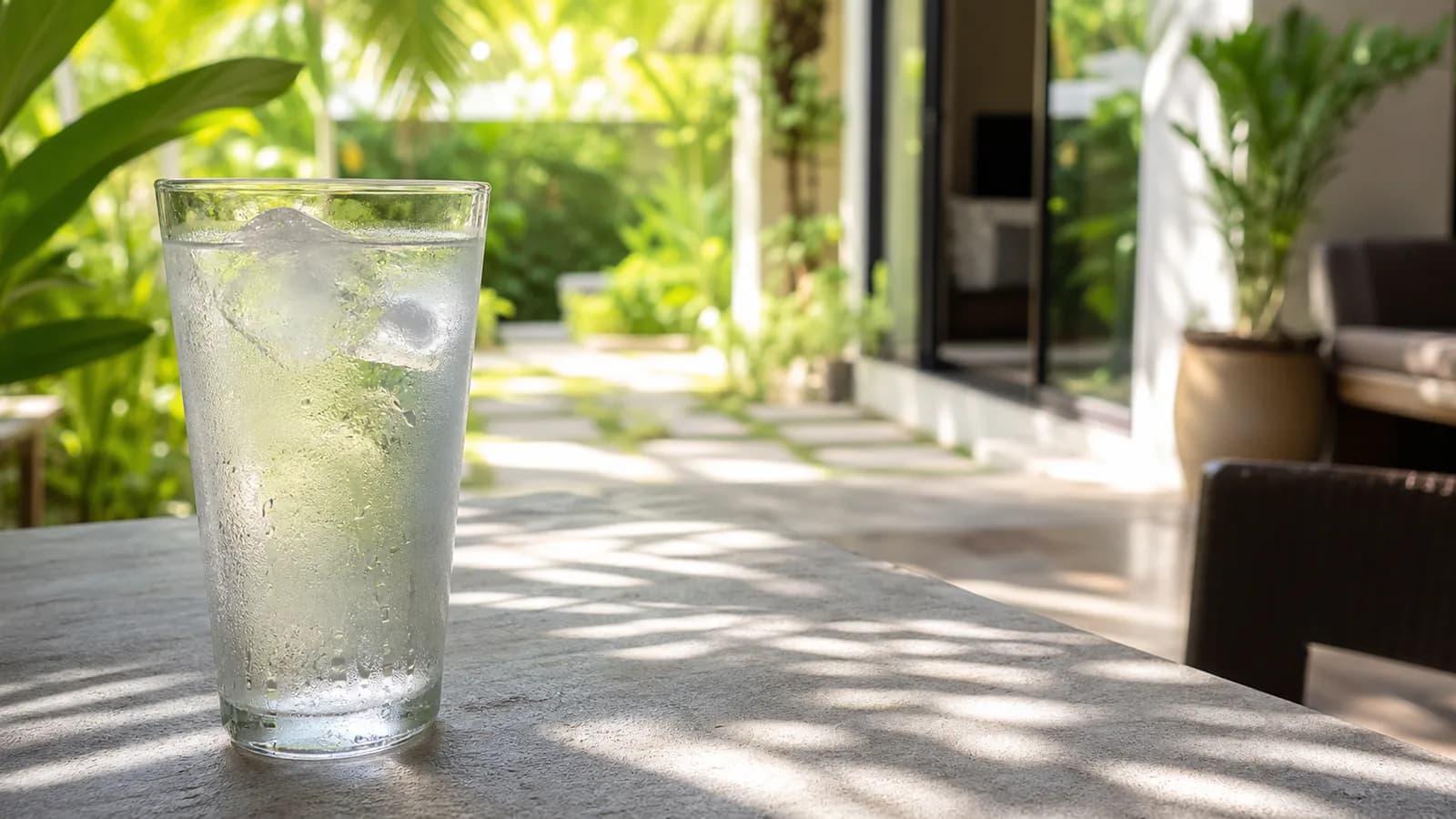
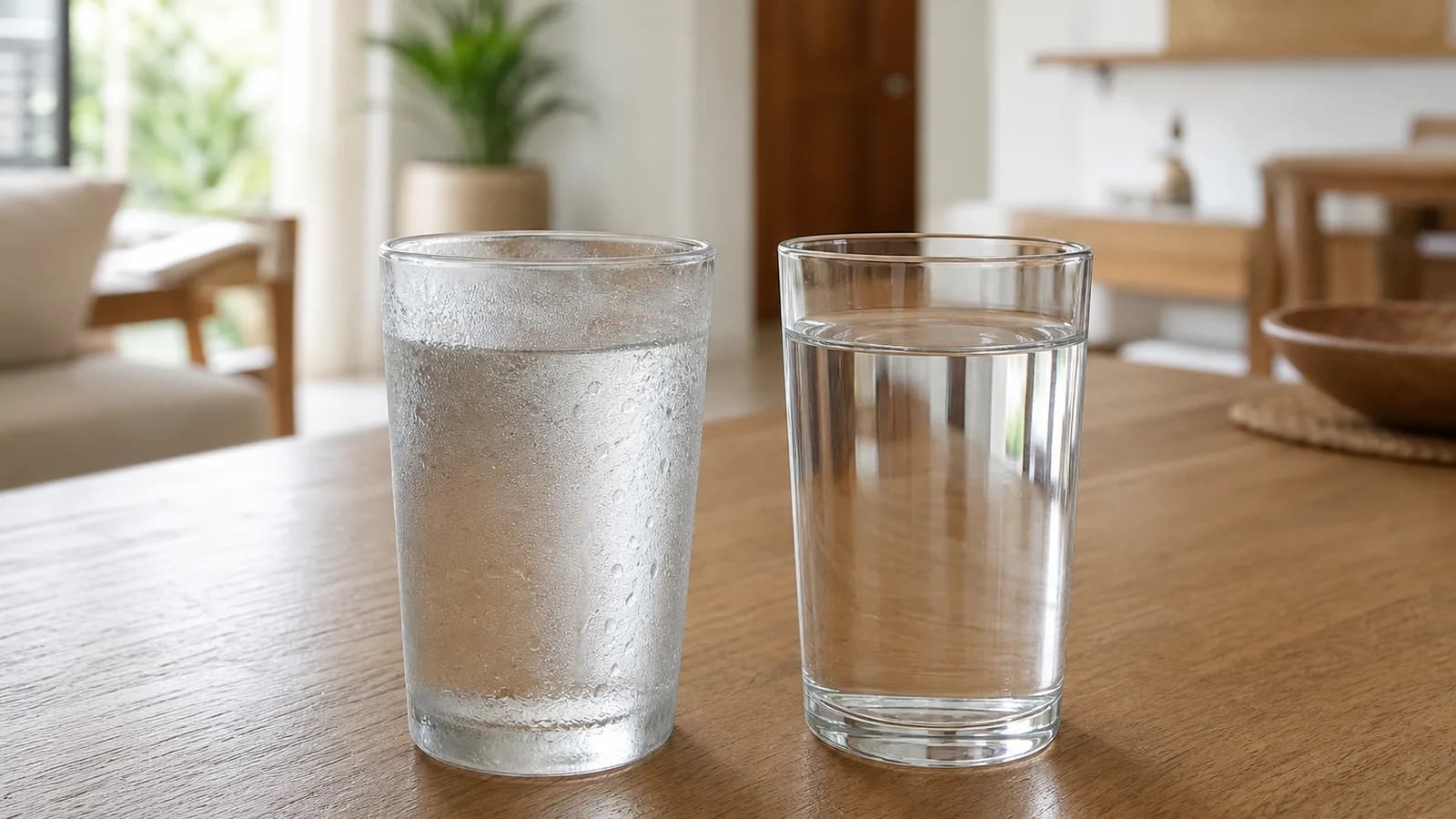
Two claims circulate about water temperature and they contradict each other. One says cold water is bad for digestion and should be avoided. The other says drinking it cold burns extra calories and is therefore an advantage. Both are wrong in the same way: they take a small physical difference and inflate it into a rule.
General information about everyday drinking habits, not medical advice. If a doctor has given you specific guidance, follow it.
The calorie claim, with the arithmetic
It is true that the body warms cold water to body temperature and that this costs energy. It is also true that the amount is trivial.
Warming a litre of near-freezing water to body temperature costs on the order of a few dozen kilocalories spread across a day — less than a slice of bread, and only if you drink the whole litre ice-cold. Nobody has ever lost weight by chilling their water, and anyone selling that idea knows it.
The harm claim
The belief that cold water damages digestion, thickens fat, or shocks the system is widespread and has no basis in the physiology. Water reaches body temperature quickly; the stomach is not a delicate instrument that a cold drink disrupts.
There are narrow exceptions that are worth naming honestly rather than dismissing. Some people get a headache from drinking something very cold very fast — the familiar brain-freeze response, brief and harmless. People with sensitive teeth notice cold water and reasonably avoid it. And anyone with a specific condition their doctor has advised them about should follow that advice rather than an article.
Outside those, there is no established reason to avoid cold water.
What temperature does genuinely change
How much you drink. That is the entire practical effect, and it is not a small one.
In a tropical climate this reduces to a simple rule: if cold water means you drink more of it, drink it cold. The volume matters and the temperature does not.
Temperature and taste
Cold suppresses flavour, which is why chilled water tastes cleaner and why anything slightly off tastes worse at room temperature. This is a genuine effect and it is worth knowing when you are judging water — a source that tastes fine chilled may taste distinctly of something when it warms.
That is a useful diagnostic rather than a problem, and where most genuine taste differences between sources come from is the subject of water hardness.
So, which one
Whichever you will actually drink. There is no health advantage on either side worth organising a habit around, and the daily total is what matters — the point of how much water should you drink each day.
If a household member avoids cold water because of a long-held belief, there is no need to argue them out of it. Room-temperature water hydrates exactly as well. The only version of this that costs anything is the person who drinks too little because their bottle is warm.
Sources
Filed under
- Hydration
- water temperature
- cold water
- myths
- habits
- hydration